.svg)
Invisalign vs. ClearCorrect: Which Clear Aligner Is Right for You?
Invisalign and ClearCorrect are both clear aligner systems that straighten teeth using a series of custom, removable trays instead of metal braces. Invisalign is the most established brand, with proprietary SmartTrack material and attachments that make it well-suited to complex cases. ClearCorrect is a strong, often more affordable alternative that works well for mild to moderate correction. The best choice depends on your specific alignment needs, budget, and treatment goals—which a dentist can determine during a consultation.
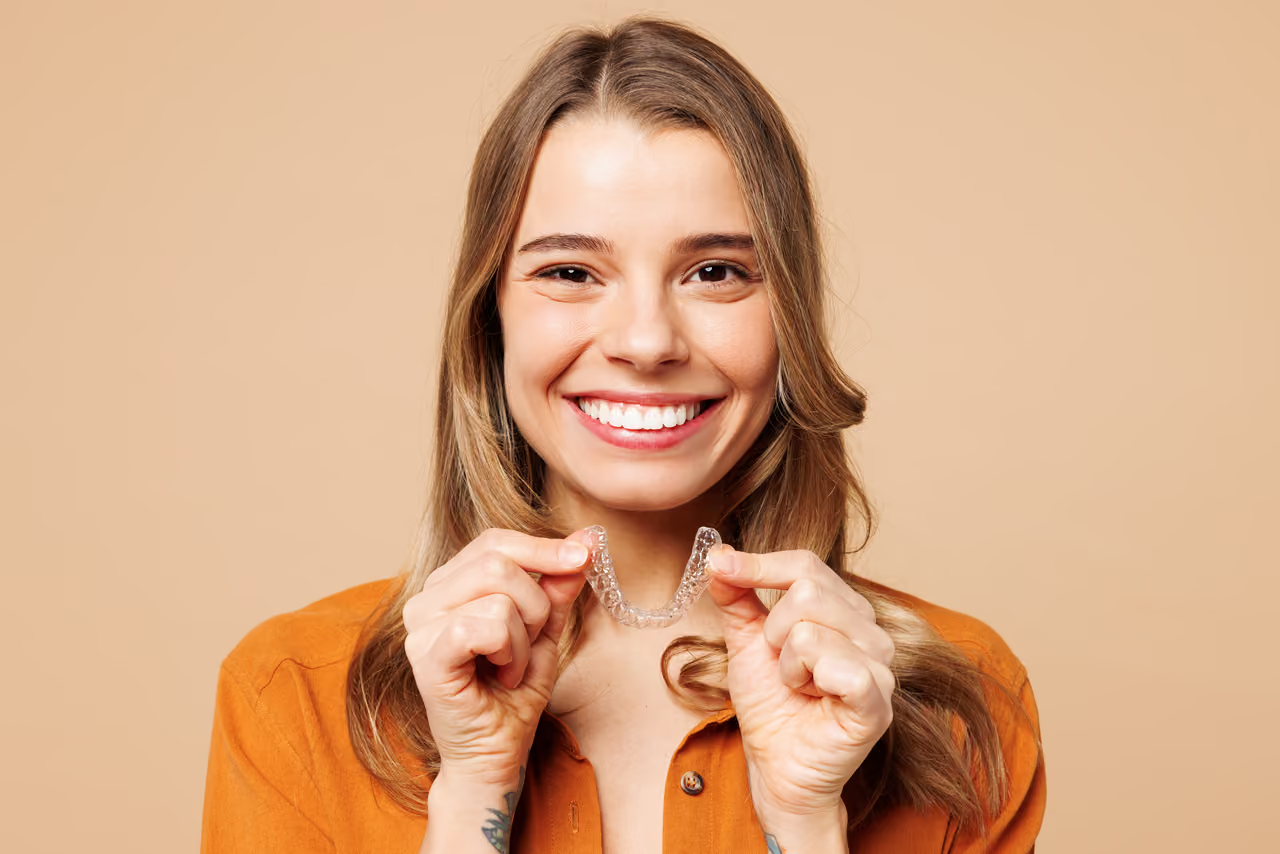
If you're considering straightening your teeth without traditional metal braces, you've likely come across two names: Invisalign and ClearCorrect. Both are clear aligner systems, both are nearly invisible, and both can give you a straighter smile—so how do you choose? At Dental Remedies in St. Augustine, we offer both, and the right fit depends on your goals, your case, and your lifestyle. Here's an honest, side-by-side look.
What Invisalign and ClearCorrect Have in Common
Before the differences, it helps to understand why these two systems are grouped together. Both rely on the same core idea: a sequence of clear, custom-made plastic trays that apply gentle, controlled pressure to move your teeth into their ideal position over time. With both systems, you can expect:
- Nearly invisible treatment — the aligners are clear and discreet, unlike metal brackets and wires.
- Removable trays — you take them out to eat, drink, brush, and floss, so there are no food restrictions.
- Custom digital planning — both use digital scans to map your treatment from start to finish.
- Comparable comfort — smooth plastic instead of metal means fewer mouth sores and irritation.
For most patients, both are excellent alternatives to braces. To see how clear aligners fit into our broader orthodontic services, you can explore the full range of options we offer.
Invisalign vs. ClearCorrect: The Key Differences
Track Record and Technology
Invisalign has been on the market since the late 1990s and has treated tens of millions of patients, giving it the longest track record and the largest body of clinical data. Its proprietary SmartTrack material and SmartForce attachments (small tooth-colored bumps that help guide difficult movements) make it especially capable with complex cases like significant rotations or bite corrections. ClearCorrect, owned by Straumann—a global leader in dental technology—has advanced considerably and offers a reliable, well-engineered system that handles most common alignment issues effectively.
Aligner Thickness and Comfort
ClearCorrect aligners are often praised for their trimmed-to-the-gumline design, which some patients find comfortable and discreet. Invisalign's SmartTrack material is engineered to be flexible yet firm for predictable movement. In practice, most patients adapt quickly to either, and comfort differences are subtle.
Treatment Time
Treatment length depends far more on your individual case than on the brand. Mild crowding might resolve in as little as six months, while more involved cases can take 12–18 months or longer with either system. During your consultation, we'll give you a realistic timeline based on your specific needs.
Cost
ClearCorrect is frequently the more budget-friendly option, which makes it attractive for straightforward cases. Invisalign can cost more, reflecting its technology and track record. That said, pricing varies by case complexity and treatment length, so the only accurate number is one tied to your specific plan. Many dental insurance plans contribute toward clear aligner treatment—we're happy to help you review your coverage.
Which Clear Aligner Is Right for You?
Here's a simple way to think about it:
- Consider Invisalign if: you have a complex case, want the longest clinical track record, or need the advanced movements its attachments enable.
- Consider ClearCorrect if: you have mild to moderate alignment needs and want an effective, often more affordable path to a straighter smile.
The truth is, the brand matters less than the dentist planning and monitoring your treatment. A well-managed ClearCorrect case will outperform a poorly planned Invisalign one, and vice versa. That's why the most important step is a professional evaluation. Learn more about our practice and approach, or read about Dr. Shanta Singh's patient-first philosophy.
Clear Aligners in St. Augustine and Beyond
Dental Remedies proudly provides Invisalign and ClearCorrect to patients throughout St. Augustine, St. Augustine Beach, Anastasia Island, and the surrounding St. Johns County communities including Ponte Vedra and World Golf Village. Conveniently located on US-1 near Flagler Hospital, we make discreet, modern orthodontic care easy to access—no downtown hassle.
Frequently Asked Questions
Is Invisalign better than ClearCorrect?
Neither is universally "better." Invisalign has a longer track record and added technology for complex cases, while ClearCorrect is an effective, often more affordable option for mild to moderate correction. The right choice depends on your specific case, which a dentist can assess during a consultation.
How much do clear aligners cost in St. Augustine?
Cost varies based on the complexity of your case and how long treatment takes. ClearCorrect is often more budget-friendly, while Invisalign may cost more. We provide exact pricing after evaluating your smile and will help you review any insurance coverage.
Do clear aligners work as well as braces?
For most mild to moderate cases—and many complex ones—yes. Clear aligners can effectively correct crowding, gaps, and many bite issues. Very severe cases may still be better suited to traditional braces, which we can discuss at your visit.
How long does clear aligner treatment take?
Most cases take between six and eighteen months depending on complexity. You'll receive a personalized timeline during your consultation.
Ready to straighten your smile?
Book a consultation at Dental Remedies to find out whether Invisalign or ClearCorrect is right for you. Request an appointment or call (904) 440-0200 today.